Surfaces That Last Under Real Use
Flat Work in Missoula for commercial and industrial properties needing durable concrete surfaces where traffic, equipment, and weathering determine longevity
Flat work establishes the surfaces that handle daily traffic, equipment loads, and exposure across commercial, industrial, and municipal properties in Missoula. Stonewall Construction provides flat concrete work including sidewalks, aprons, pads, and site slabs where surface finish, slope, and base preparation determine whether the concrete cracks, settles, or remains functional through freeze-thaw cycles and repeated loading. The service addresses projects requiring durable exterior concrete or interior floors finished to support planned use without premature failure.
The work involves subgrade preparation to specified compaction, forming to design elevations and slopes, reinforcement or fiber addition based on loading requirements, placement with proper consolidation, and finishing to match intended surface texture and drainage. Each step affects long-term performance because inadequate base support leads to settlement, improper reinforcement allows cracking, and incorrect finishing creates ponding or scaling under freeze exposure.
Arrange an on-site review to evaluate existing conditions, traffic patterns, and surface requirements before developing a detailed flat work estimate.
What You Notice Once Site Concrete Is Finished
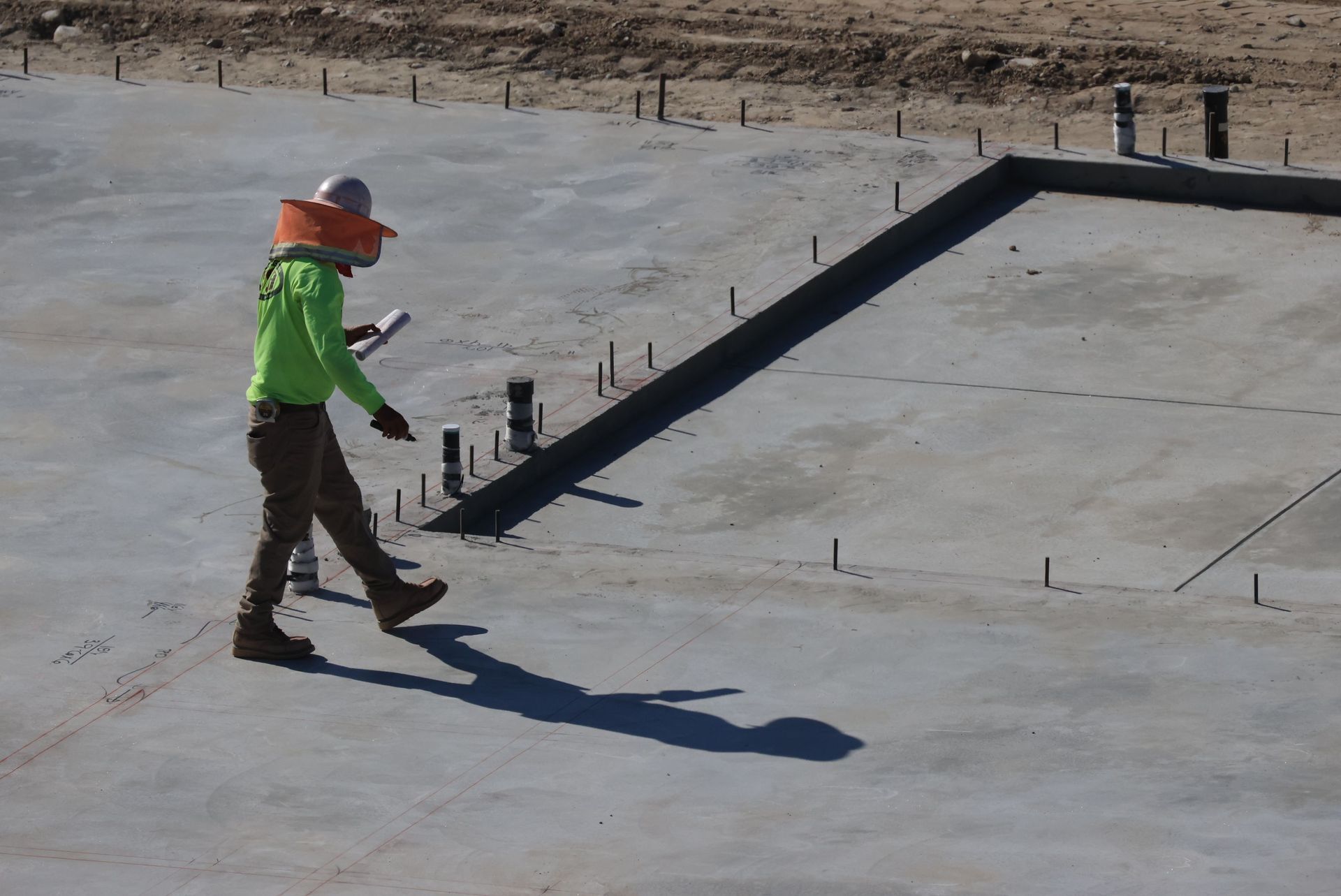
Flat work quality becomes visible immediately through surface texture, joint placement, and slope accuracy. Properly finished concrete drains without standing water, joints align with planned control lines to manage expected cracking, and surface hardness resists scaling and wear under the specific conditions of that site. In Missoula's climate, flat work exposed to freeze-thaw cycles requires air-entrained concrete and finishing techniques that close the surface without trapping bleed water, preventing delamination and spalling during winter months.
After placement and curing, you see concrete that remains level without settlement, with joints positioned to control cracking along planned lines rather than random patterns across the slab. The surface texture matches intended use, whether broom-finished for traction on walkways, troweled smooth for interior warehouse floors, or textured for equipment pads requiring specific friction characteristics. Edges and transitions between concrete and adjacent materials remain intact without crumbling or gap formation.
The scope includes base preparation verification, reinforcement placement or fiber dosing, joint layout according to panel size recommendations, and surface finishing appropriate to exposure conditions. Flat work executed without attention to base compaction or joint spacing results in serviceability problems within the first year, requiring costly removal and replacement under warranty or facility operating budgets.
Answers to Frequent Flat Work Questions
Property managers and contractors planning site concrete need specific information about execution methods, material selection, and maintenance expectations before committing to flat work installation.
What base preparation is required before concrete placement?
Subgrade is excavated to design depth, compacted to specified density, and topped with gravel base material that drains and supports uniform loading, eliminating soft spots that cause differential settlement and cracking after concrete cures.
How are control joints planned to manage cracking?
Joint spacing follows ACI guidelines based on slab thickness and aggregate size, typically spacing joints at intervals equal to twenty-four to thirty times the slab thickness, creating panels that control where shrinkage cracks form.
When should new concrete be sealed or treated?
Sealing occurs after the concrete fully cures, typically twenty-eight days following placement, allowing internal moisture to escape before applying topical sealers that protect against freeze-thaw damage, deicing salt penetration, and staining in exterior applications.
How does Missoula's freeze-thaw cycle affect outdoor flat work?
Air-entrained concrete with proper water-cement ratio and finishing that avoids surface weakening provides resistance to freeze damage, while joint sealing and drainage design prevent water accumulation that accelerates deterioration during repeated freeze-thaw exposure.
What surface finish is appropriate for equipment loading areas?
Troweled finishes provide density and abrasion resistance for forklift and vehicle traffic, while broom finishes add traction for pedestrian areas, with finish selection determined by anticipated loading, traffic type, and exposure conditions specific to each project area.
Stonewall Construction coordinates flat work with excavation, grading, and structural concrete capabilities across Montana, providing integrated site development for commercial and industrial projects. Call (406) 521-0787 with site plans and project requirements to discuss base preparation, reinforcement design, and flat work estimating for your property.